
Blogs
Civic Complacency in Political Accountability Holds Nepal Back
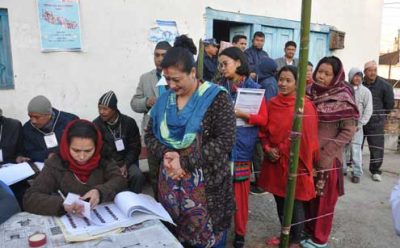
The November 2013 Constituent Assembly (CA) elections in Nepal revealed very strong anti-incumbency sentiments among the voting public. So too did the 2008 CA elections, when Nepali voters turned to the newly above-ground Maoists (CPN-M), rejecting the more “seasoned” parties such as the Nepali Congress (NC) and the Unified Marxist Leninist (UML), in order to try out a new political force with a c [...]
Using Better Evidence to Reform Nepal’s Hydropower Policy
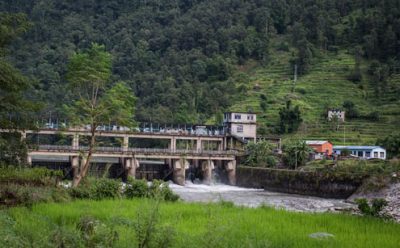
Using evidence for planning and evaluation of policies and development interventions considerably enhances the capacity of organizations working for socioeconomic change of state and society, and their change interventions in achieving desired and demonstrable goals. While there exists a general consensus among those fostering change to invest and engage in evidence-based action, the focus is prim [...]
Nepal Holds Elections: Now on to the Constitution
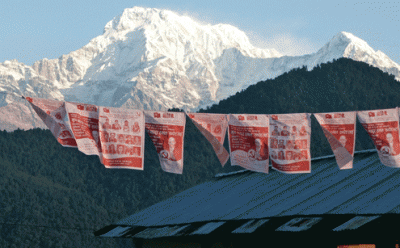
This week, Nepal once again showed the world that its people believe in a peaceful, democratic means to select those who govern them. On a cold election-day morning on November 19, an estimated 70 percent of Nepalis went to the polls – hundreds lined up well before stations had even opened – to elect a new Constituent Assembly charged with writing a long-delayed constitution. While the exuberance [...]
Debating Amnesty and Reconciliation in Nepal
The last several weeks have witnessed the unfolding of an unfortunate chain of events in Nepal with regard to a Truth and Reconciliation Commission (TRC). The commitment to form a TRC was part of the 2006 Comprehensive Peace Accord, which ended a decade-long conflict between State and Maoist forces. After this long wait, the so-called TRC ordinance was earlier this year forwarded to President Ram [...]
New Idea of Politics Needed For a Stable Nepal
Nepal has been in a state of transition since 1950. In the ensuing years, a relatively brief, decade-long romance with democracy ended in three decades of single-party, autocratic rule. Since the restoration of multiparty, democratic politics just over 20 years ago, we have had 20 prime ministers, a decade-long civil war, and an abortive constitutional development process. No elected government ha [...]
Stateless in New Nepal: Inclusion without Citizenship is Impossible
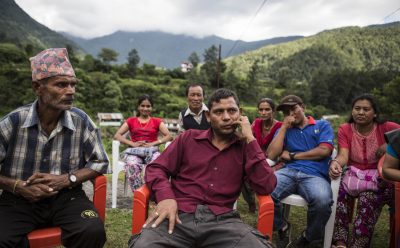
Last week, Nepal’s Constituent Assembly (CA) members drafted citizenship provisions in the country’s long-awaited constitution, causing much consternation and almost guaranteeing that approximately 2.1 million persons out of an estimated population of nearly 30 million will remain stateless. Nepal’s citizenship laws and eligibility provisions have created a large number of stateless persons who a [...]