
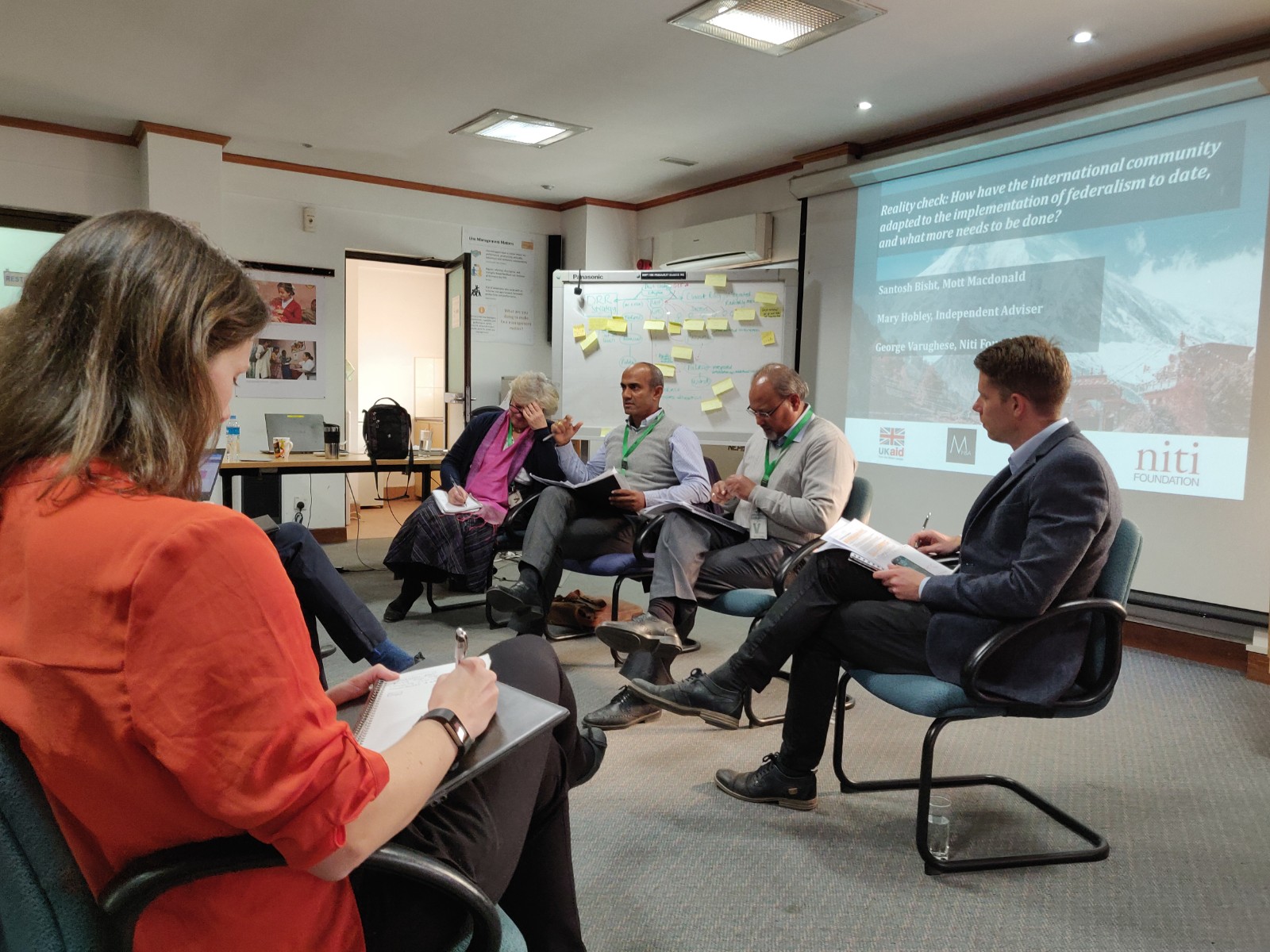
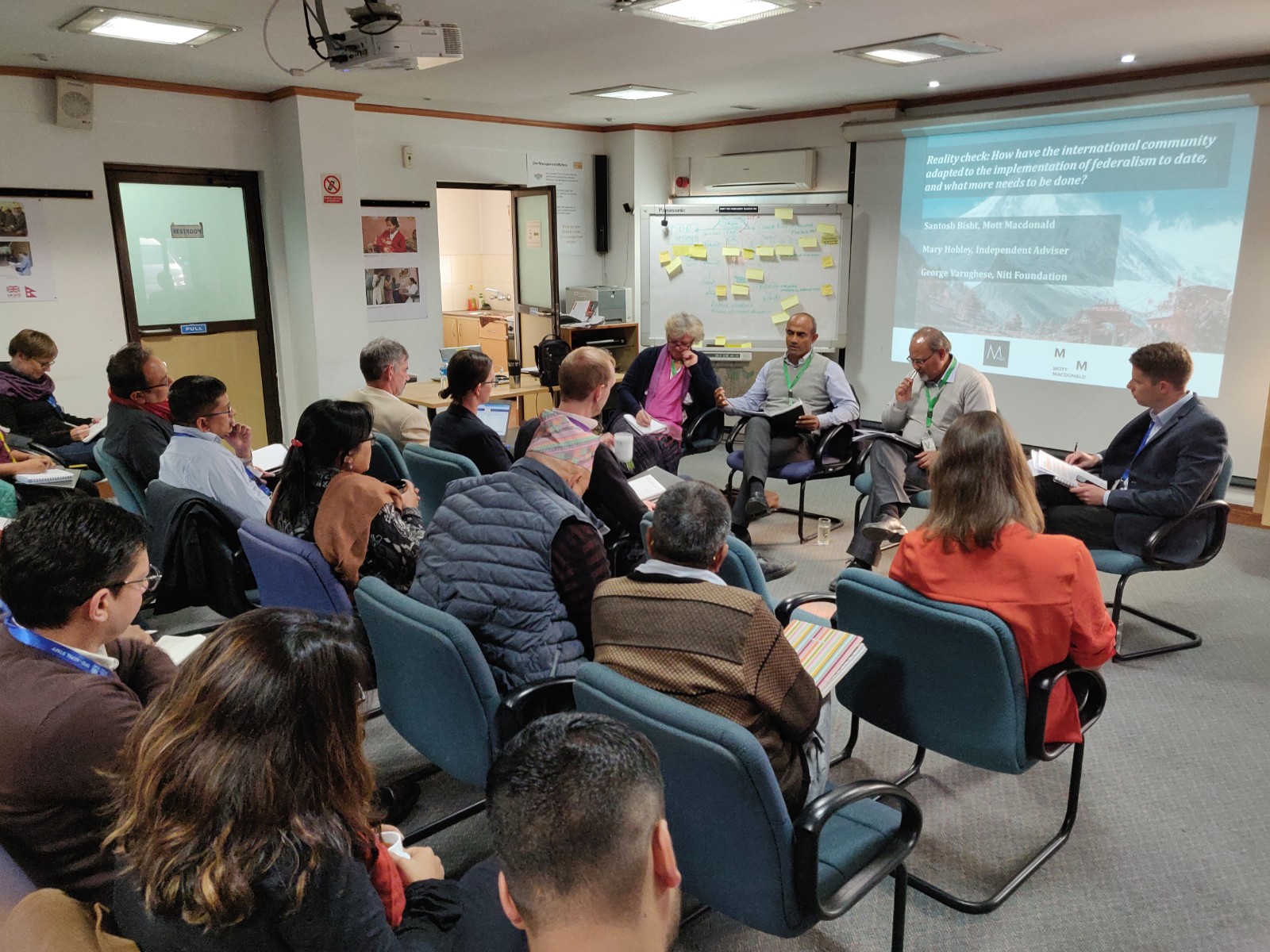
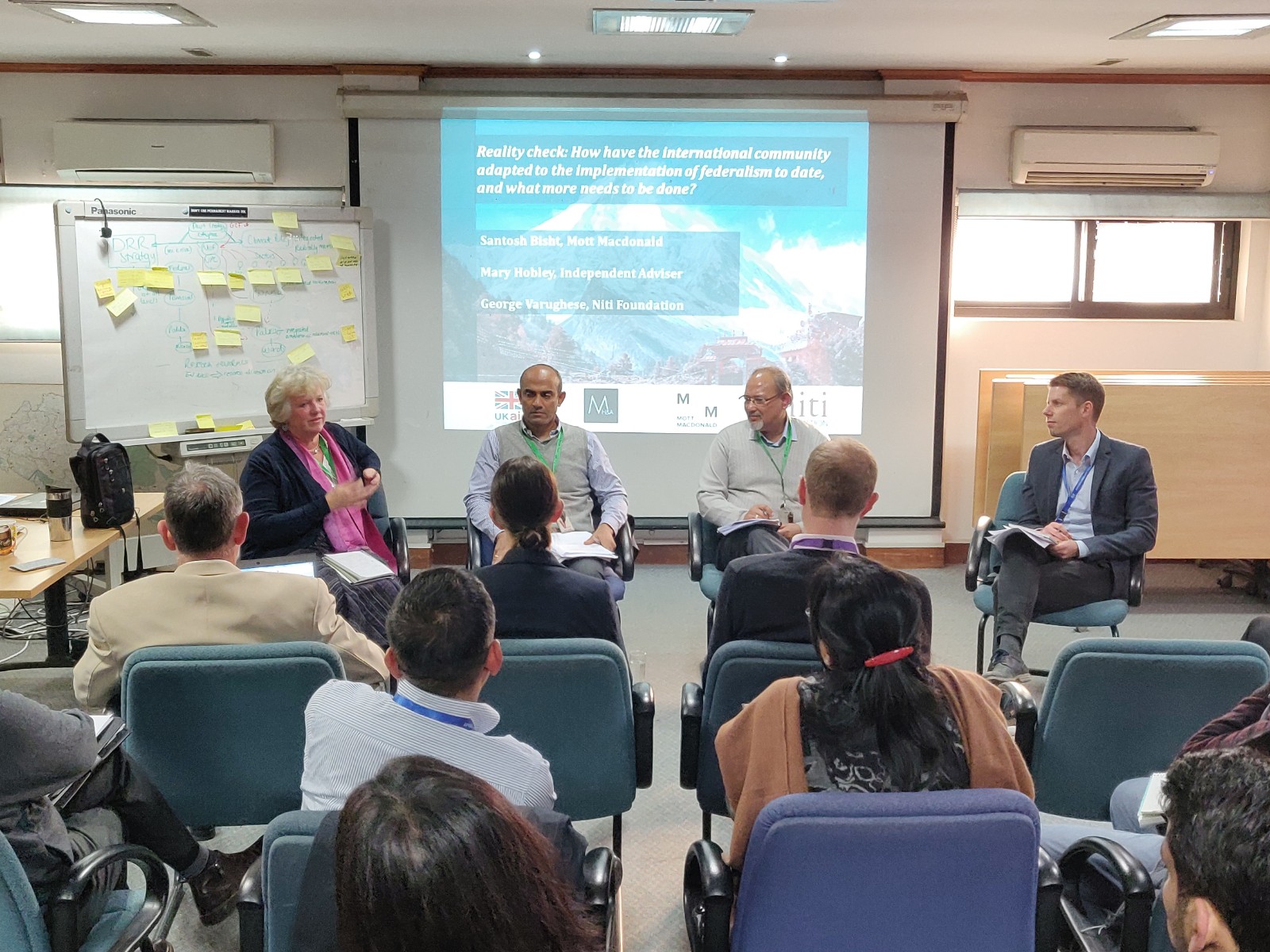
Dr. Varughese began his reflections by emphasizing the political nature of the change that is taking place in Nepal, and how different it is from developmental change as understood by most aid bureaucracies. Thus, while aid bureaucracies seem to have struggled to internalize the imperatives of federalism in the last decade or so, Dr. Varughese stressed that the most fundamental shift required in thinking is that citizens are now at the center. Essentially, the most crucial aspect of federalism must not be forgotten, which is share-rule and self-rule, as well as the opportunity for increased access to government of citizens. Further, with increased interaction and access, Dr. Varughese cautioned that the focus must not shift too far away from the most vulnerable. During transitions, the vulnerable are often forgotten, and risk becoming permanently vulnerable minorities. This is even more so for incapable states, where every shock experienced – social, political, economic or physical – creates more vulnerability. A federal system born of two popular movements and an insurgency must engage such underlying issues in meaningful ways. Given the scale of restructuring and the intense struggle for power between the status quoists and the newly empowered, Dr. Varughese also emphasized the need for donors to be mindful of institutional posture, signaling and demeanor when assistance is negotiated, designed, and delivered. Donors must be mindful about whether their posture and signaling is in accompaniment mode or patron mode, and where they locate themselves in the state-society continuum. The federal system provides donors options for relating to provincial and local governments in multiple ways. It is worth exploring creative ways to assist to avoid inefficiencies and dysfunctions of the past; something for DFID and other donors to think about.
During the latter half of his reflections Dr. Varughese spoke about the lessons to be learnt and the tensions to be managed in reference to the theme of the event. In the first section, he referred to research showing the importance of understanding the historical, political, and cultural context, and preparing for elite backlash and resistance. In addition, there is need to consult widely for long-term outcomes, manage change at organizational and political level, elevate the importance of stringent recruitment processes and ensure accountability and transparency as well as ascertain and address leadership skills required for each position. He then highlighted some tensions that must be managed, such as, galvanizing democratic participation in the public realm while simultaneously critically engaging with the state on reform. Secondly, re-balancing development assistance between institutions of representation and institutions of restraint. Thirdly, managing the cost-benefit trade-off between support for economic prosperity and that for social justice. Dr. Varughese ended with the reflection that attention to municipal (and federal) functionality must not overtake attention to provinces and wards, as federalism’s legitimacy will essentially come from provincial and ward functionality.
This above summarizes Dr. Varughese’s reflections at a panel event on 26th November 2018 at the UK Department for International Development Office in Nepal. The panel discussion was was part of DFID’s strategic portfolio review and was chaired by Gareth Rannamets, Governance Advisor, DFID with Santosh Bisht (Mott Macdonald) and Mary Hobley as other speakers.
Leave A Comment
You must be logged in to post a comment.